
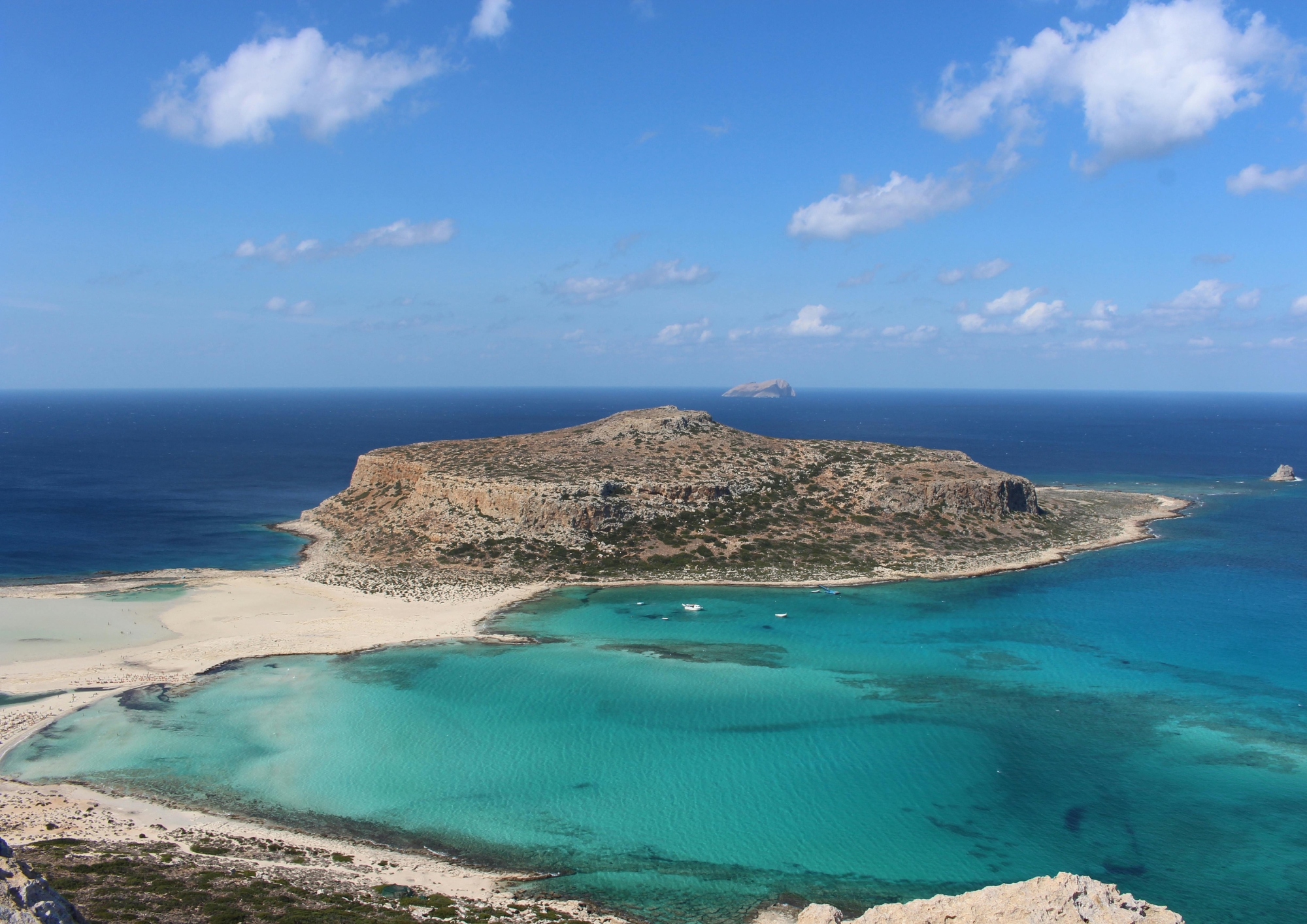
Discover Crete through tailor-made experiences designed for agencies, associations, and tour operators. From culture and history to nature, gastronomy, and active travel, we create authentic programs that reveal the island in a meaningful way. Our itineraries and ground services are flexible, reliable, and adapted to the interests of each group.
Crete is not simply the largest of the Greek islands. It is a civilization in its own right, one that has been continuously inhabited, conquered, reinvented and fiercely defended for over five millennia.
To travel through Crete's history is to move through layers: Minoan palace culture, classical antiquity, Byzantine faith, Arab occupation, Venetian ambition, Ottoman rule each a mark in the architecture, the food, the dialect, the music.
Crete absorbed them all and remained, unmistakably.
Crete is not simply the largest of the Greek islands. It is a civilization in its own right, one that has been continuously inhabited, conquered, reinvented and fiercely defended for over five millennia.
To travel through Crete's history is to move through layers: Minoan palace culture, classical antiquity, Byzantine faith, Arab occupation, Venetian ambition, Ottoman rule each a mark in the architecture, the food, the dialect, the music.
Crete absorbed them all and remained, unmistakably.
Near Heraklion · Central Crete
Knossos is the largest Bronze Age archaeological site in the Aegean and Greece's most visited ancient monument after the Acropolis. Linked to the legends of King Minos and the Labyrinth, it reveals the scale, sophistication, and imagination of the Minoan world. A massive 20,000-square-meter complex with multi-storey architecture, giant storage jars (pithoi), vivid frescoes, and a water supply and drainage system that predates Roman engineering by more than a thousand years.
Messara Plain · South-Central Crete
Phaistos, Crete's second largest palace commands a breathtaking position above the Messara plain, framed by the majestic Ida mountains. It was the royal seat of southern Crete and the discovery site of the famous Phaistos Disc—a fired clay disc covered in an undeciphered script that remains one of the ancient world’s greatest unsolved mysteries
North Coast · East of Heraklion
As the third largest and well-organized Minoan palatial complex, Malia offers a unique look into everyday Bronze Age life and reflects the practical and administrative side of Minoan life. It is an essential stop for visitors who want to understand how one of Europe’s earliest civilizations functioned.
Far East Crete · Kato Zakros
As the smallest and most remote Minoan palace, Zakros was the eastern gateway to ancient trade routes. Suddenly abandoned around 1450 BC, it preserved an extraordinary archaeological record Set at the end of the dramatic Valley of the Dead and overlooking a peaceful bay, it offers a rare and intimate glimpse into the ancient identity of eastern Crete.
Crete’s Venetian heritage gives the island some of its most distinctive urban landscapes. Harbours, fortresses, walls, gates, and old quarters still speak of a time when the island was a key point of trade, defence, and cultural exchange in the Mediterranean. The Venetian layer of Crete is visible not only in major cities, but also in the way their historic centres are shaped and experienced today.
Chania · West Crete
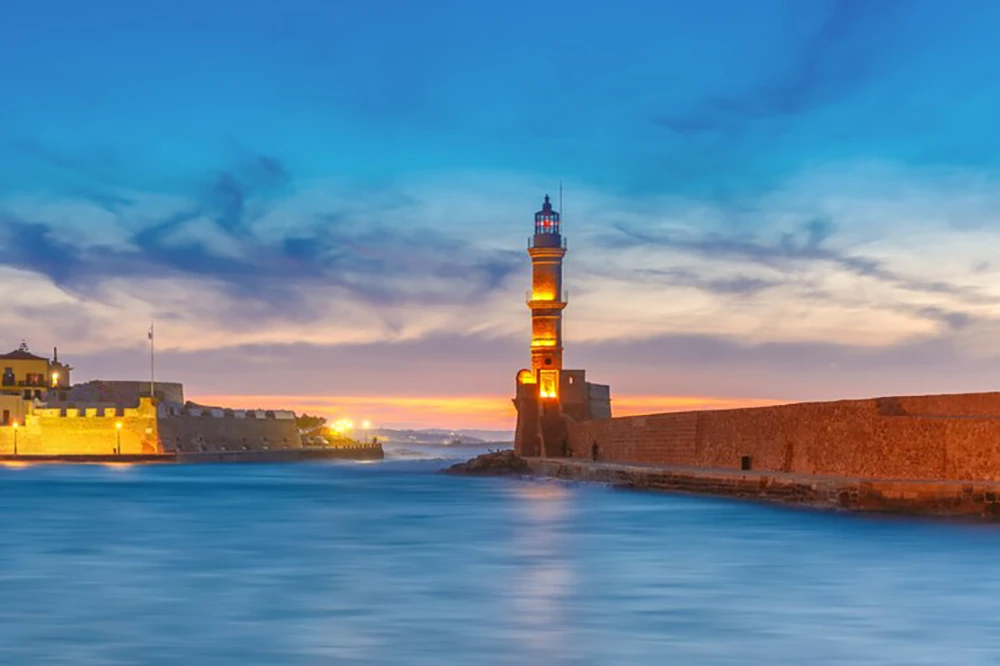
One of the most beautiful harbours in the Mediterranean, Chania’s old port combines the Venetian lighthouse, the old arsenals, the Firka fortress, and the narrow streets of the old town into a scene of rare charm and harmony. It is a place that requires no program — only time and attention..
Rethymno · West-Central Crete
Rethymno is home to one of the finest Venetian old towns in Greece. Its harbour, lighthouse, and elegant facades lead up to the impressive Fortezza, while the old town itself blends Venetian and Ottoman layers into one of the most distinctive cityscapes in Crete.
Heraklion · Central Crete
Heraklion's Venetian heritage is monumental in scale. The Koules (Rocca al Mare) fortress, which guards the entrance to the old harbour and bears the winged lion of St Mark — the emblem of the Republic of Venice. The Venetian walls that encircle the old city, built on earlier Byzantine &Arab fortifications and designed by Michele Sanmicheli, are among the most impressive military fortifications in Europe, stretching nearly four kilometres with massive bastions and gates. The Tomb of Nikos Kazantzakis, Crete’s legendary literary figure, is set within the Martinengo Bastion.
Byzantine culture left a deep imprint on Crete’s religious and artistic life, surviving through centuries of change, Arab occupation (824–961 AD), Venetian rule and Ottoman conquest. Its greatest legacy lives on in monasteries, churches, frescoes, and icon painting, which reached a peak in the 15th and 16th centuries and produced artists such as El Greco. From Panagia Kera in Kritsa to small hidden chapels, Byzantine Crete reveals a quieter, deeply authentic side of the island.
Near Agios Nikolaos · East Crete
The Church of Panagia Kera in Kritsa is home to some of the finest Byzantine frescoes in Crete and one of the most important collections in the Orthodox world. Dating from the 13th to 15th centuries, the church is covered floor to ceiling in narrative biblical scenes of extraordinary colour, expression and theological depth. The surrounding village of Kritsa adds a strong living cultural character to the visit.
Messara Plain · South-Central Crete
Gortyna was once the capital of Crete and the seat of Saint Titus, the Apostle Paul's disciple and the island’s first bishop. Its 6th-century Byzantine basilica, set among the Roman ruins of the Messara plain, remains one of Crete’s most important early Christian monument. No other site in Crete marks so precisely the moment the ancient world became the medieval one. Together with nearby Phaistos, it forms one of the island’s richest cultural routes.
The island's archaeological collections are among the richest in the world, and for any group exploring Minoan or Byzantine history, the museums provide the interpretive framework without which the sites can feel incomplete.
Heraklion · Central Crete
The Heraklion Archaeological Museum holds the world's greatest collection of Minoan art. Iconic treasures like the Knossos frescoes, the Phaistos Disc, and the Snake Goddess figurines are all concentrated here in a recently modernized building. An inseparable companion to any tour of central Crete’s Minoan sites, this museum alone justifies a half-day visit to Heraklion.
Chania · West Crete
Housed in a stunning 16th-century Venetian church, the Chania Archaeological Museum spans western Crete’s history from the Neolithic to the Roman era. Its unique Minoan collection perfectly complements the Heraklion museum, while the building's Gothic arches and peaceful atmosphere offer a truly serene cultural experience.
Rethymno · West-Central Crete
Housed in a beautifully restored Venetian building, Rethymno's archaeological collection spans the prefecture's prehistoric and ancient eras.
Sitia · East Crete
The Sitia Archaeological Museum is the primary repository for eastern Crete. It holds significant finds from the Palace of Zakros, including exceptional Minoan bronzes. Its crown jewel is the famous gold-and-ivory chryselephantine statuette of an acrobat, making this compact collection a must-visit.
History in Crete is not only archaeological. It is alive in the villages, in the music, in the festivals and in the particular pride with which Cretans hold their identity — an identity shaped by centuries of resistance, creativity and an almost fierce attachment to place. Music, dance, food, festivals, crafts and village customs continue to shape the rhythm of daily life, giving Crete a warmth and authenticity that no monument alone can convey. A festival, a handmade object, a family recipe, or a conversation in a village square can reveal as much about this island as any palace or church. This is Crete at its most human and most expressive: lived, shared, and passed down through daily practice.
Mount Ida · Central Crete
Anogia is the most famous village in Crete and one of the most symbolically charged places on the island. Twice burned to the ground — by the Ottomans in 1822 and by the Germans in 1944 — it was twice rebuilt by its inhabitants, who simply returned. Anogia is the heartland of Cretan music: the birthplace of Nikos Xylouris, the greatest lyra player of the 20th century, and a living centre of mantinades (rhyming couplets), rizitika (mountain songs) and the musical tradition that defines Cretan cultural identity. A visit here is an encounter with something that cannot be found in a museum
White Mountains · South-West Crete
Sfakia is the most remote and most fiercely independent region on the island. Hemmed in by the White Mountains and the Libyan Sea, it was never fully controlled by any occupier — not the Venetians, not the Ottomans, not the Germans. Its villages produced a disproportionate share of Crete's resistance fighters across every era, and that pride remains palpable today. The food is distinct — sfakianopita, the local cheese pie, is unlike anything else on the island — the landscape is dramatic, and the people are exactly as direct as their reputation suggests. For groups seeking the Cretan character at its most undiluted, Sfakia is the destination.
Southern slopes of Mount Ida · Central Crete
The Amari valley, sheltered between the southern flanks of the Psiloritis massif and the hills above the Messara plain, is one of the least-visited and most rewarding landscapes in central Crete. Its villages — Thronos, Monastiraki, Vizari, Ano Meros among them — contain some of the finest Byzantine frescoed churches on the island, many unlocked only on request, standing in olive groves without signage or crowds. During the German occupation, the Amari was systematically burned in reprisal for resistance activity; it was rebuilt, as Cretan villages always are, with quiet determination. For groups who want to understand the interior of the island — its agricultural rhythms, its Byzantine heritage and its living village culture — the Amari offers a half or full day of exceptional depth and almost complete solitude.
Foothills of Mount Ida · Central Crete
Zaros sits at the foot of the Psiloritis range, fed by natural springs that have supplied Crete with drinking water since antiquity and today give the village its particular greenness and tranquility. The gorge above the village leads to the Byzantine monasteries of Vrondisi and Agios Nikolaos, both set in wooded hillsides of unusual beauty. Zaros is also known for its trout — farmed in the spring-fed waters — and for a local wine tradition that reflects the altitude and cool microclimate of the area. As a half-day stop within a central Crete itinerary, it combines landscape, religious heritage and a genuinely local table in a way that few villages on the island can match.
Near Agios Nikolaos · East Crete
Kritsa is one of the largest and most architecturally preserved traditional villages in Crete. Known for its weaving and textile production — a craft tradition still practised and sold in its narrow streets — it offers groups an authentic encounter with village life that is neither staged nor touristic. Combined with the nearby Byzantine church of Panagia Kera and the ancient Dorian city of Lato on the hillside above, Kritsa anchors a half-day itinerary of exceptional cultural density in eastern Crete.
Island-wide
The kafeneio — the traditional Greek coffee house — and the plateia , the central Square of each village, are the social centre of every Cretan village. Over a Greek coffee or a glass of raki, conversations about politics, farming, family and the wider world have been unfolding here for generations. For visiting groups, a stop at a village square is not a detour — it is a direct point of contact with the daily rhythm of Cretan life that no monument or museum can replicate.
Island-wide
In Crete, traditional music is played at weddings, baptisms and festivals with the same seriousness it has always carried. The lyra and laouto remain the instruments of choice at celebrations across the island. The pentozali and the siganós — the two defining dances of Cretan tradition — are danced by people of all ages, not as demonstration but as a natural part of marking an occasion.
Crete’s musical tradition is also tied to one of its greatest literary treasures. Erotokritos, written by Vitsentzos Kornaros in the early 17th century, is a masterpiece of Cretan literature and a love poem of 10,012 verses that still lives on today through song and recitation and remains one of the most enduring expressions of love in Greek culture.
To attend a village fiesta, a panigiri, in summer is to understand that this is a culture that has never needed to revive its traditions, because it never stopped living them.
Island-wide · Seasonal
Crete's calendar of festivals — religious, agricultural and cultural — is among the richest in Greece. Easter in the mountain villages retains a communal gravity that has largely disappeared elsewhere in Europe. The summer festivals bring together music, dance and local food in village squares that feel unchanged for generations. Many villages also honour their own products and seasonal harvests, with festivals dedicated to cherries, potatoes and chochlidia (snails). The olive harvest (November–January), the grape harvest (August–September) and the saints' day celebrations throughout the year, all offer opportunities for groups to encounter Cretan culture as a living practice — not a heritage exhibit.
South Coast · Messara · Central Crete
Matala, on Crete’s southern coast, adds another distinctive layer to the island’s cultural calendar with its annual festival. Once a quiet fishing village, Matala became world-famous in the 1960s for its sea , carved into the sandstone cliffs above the beach and the free-spirited atmosphere of the most famous hippie community in Europe. The caves became a symbol of an entire generation's search for freedom at the edge of the known world, and Matala entered the mythology of the counterculture in a way that no Aegean village had before or has since. Today it remains one of Crete’s most iconic and atmospheric places.
The annual Matala Beach Festival — held each June on the beach below the caves — commemorates that era with live music, open-air performances and a spirit of gathering that draws visitors from across Greece and beyond. It is one of the few festivals in Crete that consciously connects the island's present to a very specific and very unconventional chapter of its past. For groups visiting in early summer, it offers a completely different dimension of Cretan cultural life — one that sits alongside the Minoan palaces, the Byzantine churches and the mountain villages as a reminder that this island has always attracted people who were looking for something they couldn't find anywhere else.
Island-wide · Seasonal
Crete's calendar of festivals — religious, agricultural and cultural — is among the richest in Greece. Easter in the mountain villages retains a communal gravity that has largely disappeared elsewhere in Europe. The summer festivals bring together music, dance and local food in village squares that feel unchanged for generations. Many villages also honour their own products and seasonal harvests, with festivals dedicated to cherries, potatoes and chochlidia (snails). The olive harvest (November–January), the grape harvest (August–September) and the saints' day celebrations throughout the year, all offer opportunities for groups to encounter Cretan culture as a living practice — not a heritage exhibit.